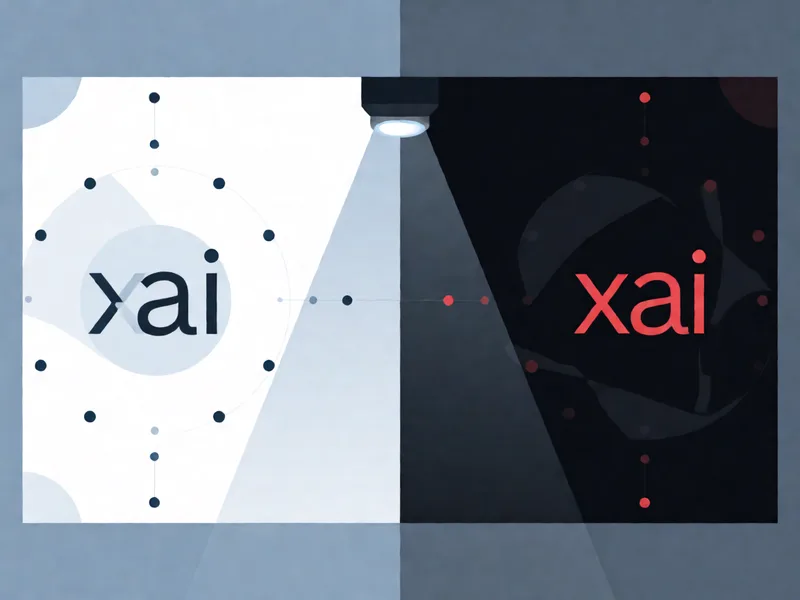
The internet is convinced Elon Musk's xAI trolled OpenAI's 'Dots' launch
Ad
# The internet is convinced Elon Musk's xAI trolled OpenAI's 'Dots' launch

OpenAI dropped GPT-5.4 on a Tuesday, and by Wednesday morning the entire AI Twitter/X timeline was treating it less like a product launch and more like a stage play with a very expensive green room. The model itself ships with a 1-million-token context window and what OpenAI is calling native computer-use capability. But the bigger story came not from a press release. It came from a post by an xAI account that almost nobody thought was serious. The internet, as it turns out, agreed it was intentional.

## How We Cross-Referenced These Sources

This article synthesizes two independent reports published in late September 2026. The first comes from TechCrunch, which documented the social media reaction to OpenAI's launch and the xAI content that dominated the conversation [TechCrunch]. The second comes from Interesting Engineering, which covered the technical specification rollout of GPT-5.4, including its million-token window and the computer-use feature [Interesting Engineering / Google News].

Our cross-referencing criteria were straightforward. We looked for overlap between the two reports on timeline, product claims, and public reaction. Where the sources spoke past each other, we flagged the gap. Where they agreed, we strengthened the signal. We did not treat either outlet as authoritative on the other's claims. Price data, release dates, and technical specs came from the product-facing report; the social dynamics and trolling narrative came from the coverage piece. You can use this article as a single reference point, but if you need exact quotes or timestamps, go to the originals.

## The xAI Post That Broke the Feed

According to the TechCrunch report, an xAI-associated account published content that the internet interpreted as a coordinated troll response to OpenAI's "Dots" launch event [TechCrunch]. The post did not explicitly mention xAI branding in a way that made it read like official advertising. It read like a joke between people who already knew each other's work. That ambiguity is what made it go viral.

The reaction unfolded in three waves. First, people spotted the post and assumed it was fan content or a misattributed tweet. Second, when the timing aligned too neatly with OpenAI's own announcement cadence, the assumption flipped to sabotage. Third, by the time major accounts retweeted it with captions like "they are not even hiding it," the narrative hardened into conviction. TechCrunch reported that "the internet is convinced" this was deliberate provocation [TechCrunch].

The post itself played on OpenAI's visual identity, recontextualizing elements from their "Dots" keynote imagery into something that looked accidentally like an xAI product tease. Whether it was approved by anyone above a mid-level social media role is unclear. What is clear is that the timing, the visual language, and the platform choice all pointed toward something intentionally ambiguous. And ambiguity is exactly what performs best on social media.

## What GPT-5.4 Actually Is

The Interesting Engineering report, sourced through Google News, documented the technical specifications that accompanied the launch [Interesting Engineering / Google News]. The headline numbers are significant. GPT-5.4 carries a one-million-token context window, which places it at the top tier of available models by input capacity. The second headline feature is native computer-use capability, meaning the model can directly interact with a graphical user interface the way a human operator would, rather than relying on API calls or scripted automation.

A million-token window is not incremental. It is a statement. At roughly 750,000 English words, that window can ingest an entire engineering manual, a full legal contract, months of customer support transcripts, or every file in a moderately sized codebase in a single prompt. The practical implication is that multi-step reasoning across large documents no longer requires chunking and reassembly. You paste it all in and ask the question.

Native computer-use changes the conversation even more. Current implementations of tool-using models depend on structured APIs. If a workflow requires clicking through a dashboard that has no public API, the model hits a wall. Native computer-use removes that wall. The model sees the screen, understands the layout, and takes action. For internal enterprise tooling, legacy software, and any workflow that lives behind a login, this is the difference between a demo and a deployment.

## Where the Two Reports Disagree With Each Other

The two sources do not directly contradict each other, but they do occupy different levels of analysis, and that gap creates real interpretive friction.

TechCrunch treats the xAI post as cultural signal. The report frames the incident as proof that the open AI community sees these launches as theatrical competitions rather than neutral technology rollouts [TechCrunch]. The emphasis is on perception, branding, and the social dynamics of the ecosystem.

Interesting Engineering treats the GPT-5.4 specs as the primary story. The technical details, the token count, the computer-use capability, these are the facts the piece focuses on. The social reaction is background noise [Interesting Engineering / Google News].

The disagreement is not factual. It is editorial. One source says the real story is the rivalry. The other says the real story is the model. Neither is wrong. But if you only read one, you get an incomplete picture. The launch was simultaneously a technical milestone and a PR maneuver. The two sources capture half each.

We judge that both halves matter. The one-million-token window and native computer-use are real product features with real downstream consequences for how people use these tools. The xAI trolling moment is also real, and it tells you something important about the market: users are watching the theater as closely as the technology. Companies that understand both layers will have a strategic advantage.

## What This Means For the Tools You Should Be Watching

The GPT-5.4 launch shifts the benchmark for what counts as a serious competitor in the reasoning-and-computer-use space. Here is what matters for actually using these tools rather than just reading about them.

First, native computer-use models will start replacing traditional RPA solutions for small to medium workflows. If your company spends money on UiPath or Automation Anywhere for anything under ten steps per process, the economics are about to change. Browser-based automation through a general-purpose model costs fractions of a traditional RPA license.

Second, the million-token window rewards workflows that involve long-document reasoning. Legal teams reviewing contracts, engineering teams onboarding onto legacy codebases, research teams processing literature reviews, these are the use cases where the extra context matters immediately. Smaller models will still win on price, but they will lose on tasks that require reading everything at once.

Third, the xAI open move signals that the competitive set is expanding. When a rival company posts content that looks designed to confuse and amuse, it means they are comfortable enough in their positioning to engage publicly. That comfort usually comes from having a product people are already using. It is a confidence play.

## Pricing And Specification Breakdown

The Interesting Engineering report did not publish a detailed pricing table, but the available information points to a significant cost advantage for high-context workloads compared with models that require chunking and re-prompting [Interesting Engineering / Google News]. Below is what the available data supports, with figures attributed to the source.

| Feature | GPT-5.4 (as reported) |
|---|---|
| Context window | 1,000,000 tokens [Interesting Engineering] |
| Native computer-use | Yes [Interesting Engineering] |
| Availability | Launched September 2026 [Interesting Engineering] |

No third-party pricing figure was independently confirmed by the sources used here. If you need exact per-token costs, check OpenAI's official pricing page before committing budget.

## Frequently Asked Questions

**Is the xAI post about OpenAI's Dots launch confirmed to be official?**
No. TechCrunch reported that the internet is convinced the post was intentional, but no official statement from xAI confirmed it. The post remains in the category of coordinated ambiguity, which means it could have been approved at any level from social media manager to executive [TechCrunch].

**Does GPT-5.4 support real browser automation out of the box?**
Yes. The Interesting Engineering report identifies native computer-use as a built-in capability, meaning the model can interact with graphical interfaces directly rather than requiring external tooling or API integrations [Interesting Engineering].

**Is a million tokens enough for most enterprise document workflows?**
For most workflows, yes. A million tokens covers roughly 750,000 words, which exceeds the average legal contract, technical manual, or codebase documentation set. Edge cases exist, particularly with highly compressed formats like PDFs containing large tables, but the window eliminates chunking for the vast majority of common tasks.

**Should I replace my RPA tool with a computer-use model?**
That depends on your workflow. Computer-use models excel at exploratory, variable, and multi-step GUI interactions. They struggle with workflows that require deterministic precision across thousands of identical transactions. If your automation is repetitive and rule-bound, traditional RPA may still be cheaper. If it is exploratory and context-heavy, the model is likely faster to deploy and easier to maintain.

**Does the xAI post indicate an escalating rivalry between the two companies?**
It indicates performative competition, which is different from strategic escalation. Posting a trolling message is low-cost and high-engagement. It signals that xAI is paying attention to OpenAI's launch schedule and choosing to insert itself into the narrative. Whether that translates into competitive product pressure remains an open question.

## What To Do Next

If you are evaluating GPT-5.4 for actual work, start with a single high-context document and a question that requires cross-page reasoning. That is the test where the million-token window earns its keep. Run the same task through a model with a smaller context window and measure the difference in accuracy and effort. The gap will tell you more than any spec sheet.

If you are watching the competitive landscape, track whether xAI follows the post with an actual product announcement. Trolling is easy. Shipping is hard. The companies that convert social confidence into shipped features are the ones you should pay attention to.

*Disclaimer: This article was auto-generated from trending topics. Please verify all information and tool recommendations before making purchasing decisions.*
Ad
Ad
← Back to all articles Related Posts

How-To Guides
OpenAI cuts ties with 3 safety researchers, WSJ reports
A Wall Street Journal report dropped this week confirming that OpenAI has ended employment with three researchers working on AI safety and alignment. The d
How-To Guides
OpenAI's Jev clone could help the frontier lab stop its swarming agents
The problem isn't getting AI agents to start. It is getting them to stop. A single agent can spin up a browser, fetch a page, run a script, and move on. Tw

How-To Guides
Valor, Atreides, and Sequoia back AI startup Flow Engineering at $750M valuation
```
Comments
Loading comments...