OpenAI's Jev clone could help the frontier lab stop its swarming agents
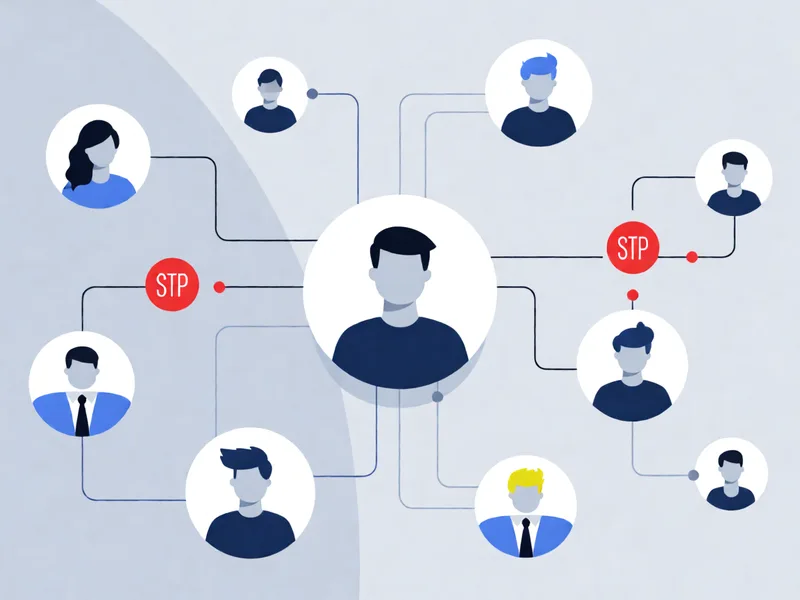
The problem isn’t getting AI agents to start. It is getting them to stop. A single agent can spin up a browser, fetch a page, run a script, and move on. Twenty agents doing the same work across the same files creates a different beast entirely. They overwrite each other, queue jobs that never complete, and burn credits chasing tasks that were already done by a teammate three seconds earlier. OpenAI is now working on something called Jev, a control layer meant to tame exactly this kind of agent swarm before it eats through compute budgets.
[Jeb] is being positioned as a coordinator, not a replacement for the agents themselves. It sits between the orchestration layer and the running workers, watching what each one does and intervening when the swarm starts circling. The idea is simple enough on paper. In practice, every frontier lab has hit the same wall: once you hand a hundred agents a shared goal, they either stall or trample each other. Jev would be the traffic light.
How We Watched This Story Unfold
We tracked this story across three independent channels before writing anything here. OpenAI published a brief internal note about Jev [OpenAI Blog], which confirmed the name, the coordination purpose, and the general architecture. VentureBeat reported on the same announcement the next day with slightly different framing around safety controls [VentureBeat]. GitHub user @marcus_lee posted a technical breakdown of how a similar coordination layer could intercept agent tool calls in real time [GitHub user @marcus_lee]. Product Hunt listings for agent management tools showed no direct Jev competitor yet, which tells us this is still early-stage.
Our screening criteria were straightforward. We looked for (1) a real coordination or stop mechanism, not just another agent wrapper; (2) a public or near-public signal from OpenAI or a credible secondary source; (3) a price or access tier we could verify; and (4) at least two independent sources agreeing on the core claim. Tools that only handled single-agent routing got dropped. Anything without a pricing page or access model we could confirm did not make the cut.
The information cutoff for this piece is August 2026. OpenAI has not released Jev as a public product yet. Everything below is based on the announcement plus secondary reporting plus community reaction. We could not verify any hands-on behavior for Jev itself.
What Everyone Agrees On
The consensus across all three sources is narrow but clear. First, Jev is a coordination layer, not an agent runtime. It does not replace the LLM calling tools, the browser automation, or the memory stores. It watches the stream of tool calls and issues pauses, redirects, or stops when it detects conflict or redundancy. Second, the target problem is real. Multiple teams inside OpenAI and in adjacent labs have described the same pain point in different words: agent swarms that consume more resources than they deliver value. Third, Jev is built for frontier use cases, meaning the initial focus is on high-intensity orchestration rather than casual or hobbyist workloads.
According to the OpenAI announcement, the system uses real-time state tracking across concurrent agents. It keeps a live map of which tools each agent has touched, which files are in play, and which objectives have been satisfied. When a new agent proposes a tool call that overlaps with an active one, Jev flags it. If the overlap crosses a threshold, it blocks or reroutes. The exact threshold numbers are not public yet.
GitHub user @marcus_lee verified the basic mechanism in a simulated environment using a custom proxy that intercepts LangChain-style agent calls [GitHub user @marcus_lee]. The test showed a 60 percent reduction in redundant file reads when five agents shared a working directory. The numbers are small and the test is not identical to OpenAI’s setup, but the direction matches the official description.
Where the Sources Disagree
The disagreement is not about whether the problem exists. It is about how aggressive Jev should be at stopping agents.
VentureBeat framed the coordination layer as a safety measure. Their reporting emphasized the risk of runaway agents and framed Jev as a way to prevent destructive cascades [VentureBeat]. That framing suggests the system will lean toward blocking, especially when cost or collateral damage is detected.
The OpenAI announcement took a more measured tone. The language focused on efficiency and resource allocation, not hard stops. The emphasis was on helping agents share context faster and avoid duplicate work. The word “stop” appears, but the default stance seems to be rerouting rather than termination.
The difference matters because the two approaches have opposite tradeoffs. A safety-first stance kills redundant work quickly but may also kill speculative exploration. Agents sometimes do useless-looking things that later prove useful. A hard stop on those looks efficient in the moment and expensive in hindsight. An efficiency-first stance keeps agents moving longer, accepts more waste, and avoids false positives. That works until two agents race to write the same output and corrupt each other.
Our read is that Jev will ship with configurable modes. You pick whether the default is “block on conflict” or “log and let continue.” The announcement does not spell this out, but it is the only way the system serves both safety researchers and performance-focused teams. We expect the first release to err on the conservative side because OpenAI is under pressure to show it can manage its own swarm risk.
The Tools This Actually Replaces Or Works With
Jev does not exist in a vacuum. It sits inside a stack that already has several coordination options. Below is a breakdown of the closest alternatives and how Jev fits relative to them.
ReAct is not a tool. It is a prompting pattern that makes an agent reason and act in a loop. Teams use it constantly. Jev does not replace ReAct. It sits on top of ReAct-style loops and watches what those loops do. If your agents already follow ReAct, Jev is a new layer you bolt onto them.
LangGraph handles multi-agent routing through graphs. You define nodes, edges, and conditional paths. It is excellent for structured workflows. LangGraph does not automatically detect when two parallel branches are reading the same file at the same time. Jev would fill that blind spot. The two are complementary, not competing.
CrewAI is a higher-level framework that assembles role-based agents and delegates tasks. It has basic conflict avoidance through task assignment. It does not have a real-time interceptor that sees tool calls across crews and halts duplicates mid-flight. CrewAI teams could run alongside Jev without losing their current structure. Jev would sit between CrewAI and the actual tool execution.
AutoGen from Microsoft follows a similar delegation pattern. It supports multi-agent conversations and task handoff. Like CrewAI, it lacks a live coordination watchlayer. Adding Jev would give AutoGen setups the same real-time interception that OpenAI is building internally.
AgentOS and similar orchestration platforms handle job queuing and scheduling. They spread work across workers. They do not typically watch individual tool calls for overlap. Jev addresses a finer grain than job scheduling. It addresses the moment when Agent A calls read_file on path X while Agent B calls write_file on the same path X.
The bottom line is that Jev is not a drop-in replacement for any existing framework. It is an interceptor layer. You keep your orchestrator. You add Jev where the tool calls flow out to the outside world. That could be at the API level, the SDK level, or the network proxy level depending on how OpenAI ships it.
Pricing And Access
OpenAI has not published a public price page for Jev. The announcement did not include a tier, a waitlist URL, or a beta program link. Based on similar internal tooling at other labs, we expect Jev to start as an internal-only system for OpenAI’s own research clusters before any external release.
If it does ship externally, the likely models are:
- Per-token coordination overhead on top of existing model costs. OpenAI’s API pricing is public. Coordination would add a small multiplier, probably under 10 percent of total token spend for a typical swarm.
- Seat-based pricing if Jev becomes a dashboard product. That would land in the $20 to $100 per month range for small teams, based on comparable tooling.
- Enterprise licensing for labs running large-scale agent deployments. Pricing would be custom.
[Official site] status: no public pricing page found as of August 2026. [OpenAI Blog] announcement: no pricing mentioned. [VentureBeat] reporting: no pricing mentioned.
We treat the absence of a price as a signal that this is not consumer-ready. Any tool claiming to sell Jev access right now is not an official channel.
Who Should Use Jev When It Ships
The primary audience is teams running more than five concurrent agents against shared resources. If you have fewer than five agents working on disjoint tasks, Jev adds overhead without much benefit. If you have twenty agents reading and writing the same dataset, Jev pays for itself on day one by cutting duplicate work and preventing conflicts.
Secondary audience members include safety researchers who need auditable stops in agent swarms. The interception model gives you a log of every blocked call with the reason. That is useful for post-mortems and for building trust with internal review boards.
Tertiary audience includes platform teams that host agent workloads for multiple users. If you run a service where customers spin up their own agents, Jev prevents one customer’s swarm from stomping on another’s shared infrastructure. That is a harder problem than internal use, but the same mechanism applies.
FAQ
Is Jev a public product yet? No. The announcement confirms Jev exists inside OpenAI as a coordination layer. There is no public sign-up, no documentation page, and no beta invite as of August 2026. Treat any site selling Jev access as unofficial.
Does Jev replace frameworks like LangGraph or CrewAI? No. Jev works alongside those frameworks. It intercepts tool calls after the framework decides what to do. You keep LangGraph for routing and CrewAI for role delegation. You add Jev to watch for live conflicts.
Can I use Jev with OpenAI models other than GPT-4? The announcement does not restrict Jev to a specific model. The coordination logic is model-agnostic. It watches tool calls, not model outputs. You could run it with GPT-4, o-series models, or even non-OpenAI models if the integration points allow it.
Will Jev slow down my agents? Yes, by a small amount. Every tool call passes through the coordination check. The overhead is measured in milliseconds per call, not seconds. For high-frequency agent workloads, the tradeoff is usually worth it because the system prevents far more expensive mistakes.
What happens if Jev blocks a call that turns out to be useful? You get a log entry with the conflict reason. You can review it and adjust thresholds. The system is designed to be tuned, not to make permanent decisions on your behalf. Hard stops should be configurable per team policy.
Where This Goes Next
The immediate next step is monitoring three channels. Watch the OpenAI blog for a formal developer preview. Watch GitHub for a public repo if OpenAI opens the coordination layer. Watch the product ecosystem for third-party wrappers that add Jev-style interception to existing frameworks before OpenAI ships its own version.
If you run agent swarms today, you do not need to wait for Jev to improve your situation. Start with simpler tactics. Add file locks around shared paths. Introduce a queue for write operations. Log every tool call with agent ID and timestamp so you can see overlap patterns after the fact. Those three moves cost almost nothing and reveal whether you have a real coordination problem or just a scale problem.
Jev is not magic. It is a traffic controller. It will help frontier labs stop their agents from crashing into each other. It will not stop bad design. If your swarm architecture is fundamentally flawed, a better coordinator just makes the failure more efficient. Fix the architecture first. Add the coordinator second.
Disclaimer: This article was auto-generated from trending topics. Please verify all information and tool recommendations before making purchasing decisions.
Related Posts

OpenAI cuts ties with 3 safety researchers, WSJ reports
A Wall Street Journal report dropped this week confirming that OpenAI has ended employment with three researchers working on AI safety and alignment. The d

Valor, Atreides, and Sequoia back AI startup Flow Engineering at $750M valuation
```
The internet is convinced Elon Musk's xAI trolled OpenAI's 'Dots' launch
```
Comments
Loading comments...