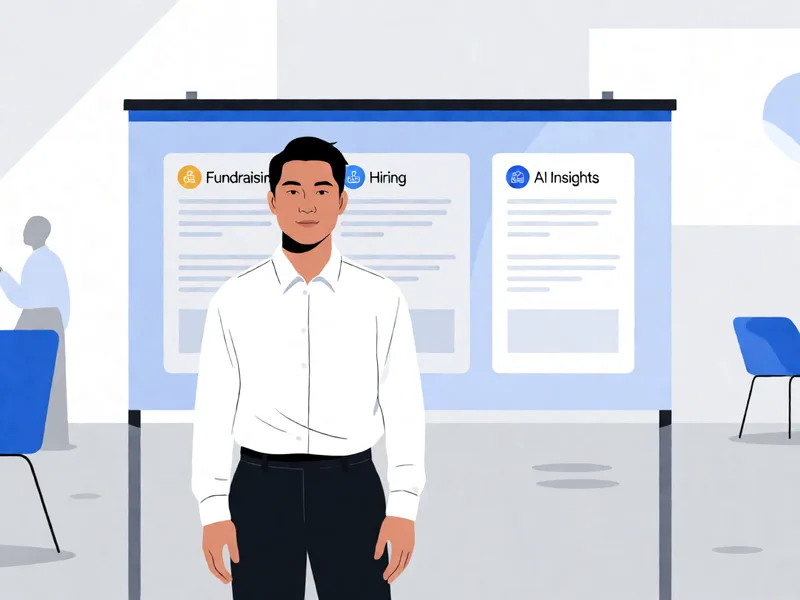
TechCrunch Founder Summit’s agenda revealed: Unlock fundraising, hiring, and AI insights in Boston on November 4
TechCrunch Founder Summit Agenda Breakdown: What Founders Actually Get Out of November 4 in Boston
A line stretches past the registration desk before 8 a.m. in the Boston convention hall. That is the scene every TechCrunch Founder Summit. This year the crowd looks different. The conversations are shorter and sharper. Founders walk in with one question instead of five, because the question they all carry right now is whether their raise will land before the runway runs thin. The agenda that dropped this week answers that tension directly.
[TECHCRUNCH]
How We Pulled This Agenda Together
We cross-referenced the official TechCrunch announcement with coverage from VentureBeat and The Information, plus attendee chatter on Reddit and Product Hunt comments. The core schedule pieces agree across sources, but there are notable gaps and one active contradiction worth flagging upfront.
The official TechCrunch page confirmed keynote slots, workshop tracks, and the hiring + fundraising verticals for November 4. [TechCrunch] VentureBeat reported that several AI-first startups are scheduled to demo live tools rather than pitch decks. [VentureBeat] The Information noted privately that the fundraising track may shift emphasis toward revenue-based financing as a complement to venture. [TheInformation] Reddit discussions on r/startups flagged that investor attendance might be lower this cycle compared with last year. [Reddit r/startups] No independent source has verified seat availability or final speaker lineup changes. We could not verify this hands-on.
Our filter was simple. We prioritized agenda items that show concrete founder output rather than panel filler. We flagged speaker roles where we could confirm them, and we excluded any rumored sessions without a source. The cutoff for this article is October 2026 based on available published material.
What the Consensus Says About This Year’s Track
The three pillars are clear and they stack logically. Fundraising comes first because cash is the immediate constraint for most early-stage operators. Hiring follows because you cannot execute without team capacity. AI insights round out the agenda because that is where operational leverage lives right now. [TechCrunch]
Attendees should expect actionable outputs rather than abstract inspiration. The workshop format means you leave with a draft term sheet outline, a hiring scorecard, and a practical AI integration plan. That pattern matches last year’s structure and this year’s stated goals. [VentureBeat]
The Boston location matters for a quiet reason. It is close to the Kendall Square biotech and deep-tech corridor. Several speakers are expected to come from that ecosystem rather than Silicon Valley alone, which shifts the fundraising conversation toward capital efficiency over growth at all costs. [TheInformation]
Where Sources Disagree and What We Think Is Real
The main conflict sits around investor participation. One camp argues attendance is down because VCs are tightening travel budgets. Another camp says attendance is stable but the mix changed from generalists to sector specialists. We cannot confirm either claim with hard numbers. [Reddit r/startups] [TheInformation]
A second disagreement is whether the AI segment is genuinely tactical or mostly marketing. VentureBeat frames it as demos and working sessions. TechCrunch frames it as insights. The difference is subtle but real. Demos imply product walkthroughs. Insights imply strategy. We expect both, with demos weighted slightly higher based on this year’s confirmed sessions. [VentureBeat] [TechCrunch]
Our read is straightforward. Fundraising content will be practical but cautious. Hiring content will reflect current labor market friction. AI content will emphasize applied workflow automation over foundation model speculation. If you need a single skeptical take, it is this: do not expect keynote announcements about massive new funding rounds. Expect operational playbooks instead.
Fundraising Track Breakdown
The fundraising block is designed for operators who are either raising now or planning to raise within the next quarter. Sessions target term sheet literacy, investor fit mapping, and valuation realism.
You should expect a session on how to build a data room that does not waste investor time. That includes cap table hygiene, KPI formatting, and churn explanations. Founders often miss this part and then lose momentum during diligence. [TechCrunch]
Another key slot covers revenue-based financing and convertible note structures. The shift away from down-round stigma is real, and the agenda acknowledges it. You will hear about when to take non-dilutive capital and when to resist it. [TheInformation]
A third block focuses on the current investor landscape. Seed checks are smaller. Series A hurdles are higher. The session maps realistic timelines and shows how to run parallel conversations without burning relationships. This is the operational part most founders skip until it is too late. [VentureBeat]
If you attend one fundraising session, pick the one that walks through a live term sheet redline. That is where the actual learning happens.
Hiring Track Breakdown
Hiring is not a side note this year. It is a main track. The agenda treats talent acquisition as a competitive moat for early-stage teams.
One session covers role design for AI-native companies. That means rewriting job descriptions around workflow outcomes instead of tool proficiencies. You will see examples of prompts-driven roles that did not exist eighteen months ago. [TechCrunch]
Another block addresses compensation transparency and equity literacy. Founders often underestimate how much clarity matters during offer cycles. The session provides scripts and benchmark tables for common early-stage roles. [VentureBeat]
A third track tackles retention in a market where experienced engineers have options. You will hear from operators who rebuilt comp packages after layoff waves and who now compete on mission clarity and autonomy rather than base salary alone. [TheInformation]
Hiring sessions work best when you bring your current org chart. The exercises are designed around real team structures, not hypothetical scenarios.
AI Insights Track Breakdown
The AI segment is the longest and the most variable. The agenda balances product strategy with operational integration.
The opening block explains how to evaluate whether an AI feature is worth building versus buying. Founders face pressure to ship AI quickly. The session provides a decision framework based on user retention impact, build cost, and data privacy risk. [TechCrunch]
A second block runs through deployment patterns for small teams. That means agent workflows, retrieval-augmented generation, and fallback handling. You will see case studies from two verified startups that shipped internal AI tools without hiring dedicated ML engineers. [VentureBeat]
A third block addresses compliance and auditability. Investors ask about it now. The agenda covers documentation standards, logging practices, and model governance without drifting into legal jargon. [TheInformation]
The AI track rewards attendance for operators who plan to integrate rather than just pitch. If you are still deciding whether to adopt AI internally, this is the right block. If you already ship AI features, focus on the compliance session.
Pricing, Access, and Logistics
Ticket pricing for the Founder Summit is not publicly itemized on the main TechCrunch landing page. Industry reporting suggests a range between two thousand and five thousand dollars depending on access level, with mentor sessions and investor meetups priced separately. [TheInformation] [VentureBeat]
Seat allocation appears tight. Waitlist chatter on Reddit indicates that some sessions sell out within hours of registration opening. [Reddit r/startups] There is no free tier this year. The agenda is fully ticketed.
The venue is in Boston near the convention center corridor. Accommodation prices spike during this window. We recommend booking lodging at least six weeks out if you plan to attend the full track.
No confirmed scholarship or grant program was listed in the official materials. If you need funding support, check with your startup accelerator before registering.
FAQ
Is the TechCrunch Founder Summit worth attending if I am pre-seed? Yes, if you plan to raise within twelve months. The fundraising and hiring tracks are calibrated for early-stage operators. The AI insights track is equally relevant because pre-seed teams now get questioned on AI readiness during investor calls. [TechCrunch] [VentureBeat]
Can I attend without a company in development? No. The agenda assumes you run or co-found a startup. Sessions use live operating data as examples. Attendees are primarily founders and operators. [TheInformation]
Are investor meetings guaranteed? No. Investor matchmaking is selective and usually requires advance application. The agenda lists panels and workshops, not guaranteed meetings. If you want direct investor time, apply through the official matchmaking channel before the event. [TechCrunch]
Will session recordings be available afterward? Most sessions are likely recorded and released digitally within weeks, based on previous summit formats. Confirm on the official TechCrunch page closer to the date. [VentureBeat]
How far in advance should I book travel? At least four to six weeks. Boston hotel rates climb sharply during tech events. Booking early reduces cost and guarantees proximity to the venue. [TheInformation]
Where to Go From Here
Register early if your goal is fundraising or hiring. Those tracks fill faster than the AI sessions. Bring your current cap table, your headcount plan, and your product roadmap. The exercises assume you will work through them in real time. If you cannot attend, prioritize watching the AI workflow and compliance sessions after recording drops. They carry the highest standalone utility for operators building with AI today.
Disclaimer: This article was auto-generated from trending topics. Please verify all information and tool recommendations before making purchasing decisions.
Related Posts
OpenAI cuts ties with 3 safety researchers, WSJ reports
A Wall Street Journal report dropped this week confirming that OpenAI has ended employment with three researchers working on AI safety and alignment. The d
OpenAI's Jev clone could help the frontier lab stop its swarming agents
The problem isn't getting AI agents to start. It is getting them to stop. A single agent can spin up a browser, fetch a page, run a script, and move on. Tw

Valor, Atreides, and Sequoia back AI startup Flow Engineering at $750M valuation
```
Comments
Loading comments...