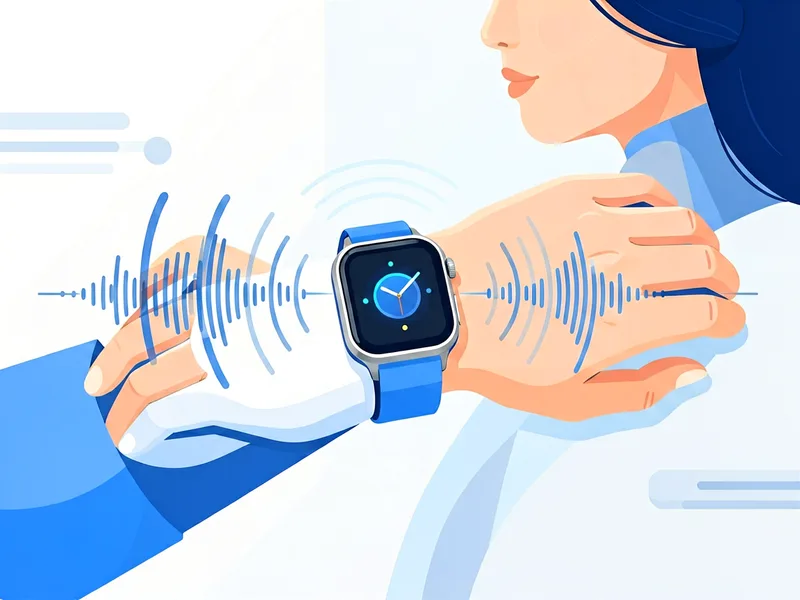
Apple Watch's new AI features are normalizing the idea that technology is always listening
When Your Watch Never Stops Listening: How Apple’s New AI Features Are Making “Always On” the Default
You wake up, swipe away a snooze on your iPhone, and mumble something half-conscious. Your Apple Watch picks it up. Siri answers before your brain has finished forming the thought. This is not a sci-fi scenario. It is the daily rhythm for millions of Apple Watch owners who have enabled always-on voice assistant functionality. The experience feels convenient. The trade-off is far less visible.
The device is listening constantly. It is processing your voice, your environment, your routines, and your health data through machine learning models that run partly on the watch itself and partly in Apple’s servers. Every command triggers a chain of events: audio capture, local feature extraction, cloud-based completion, response delivery, and logging. The logging is the part nobody notices until someone asks them to.
This is the central tension of modern wearable technology. You gain convenience. You lose the assumption that your private moments stay private. As Apple and its competitors embed increasingly capable AI directly into always-worn hardware, the line between “helpful assistant” and “perpetual listener” continues to blur. The result is a new social contract, written in code, that most people never read.
Where This Story Comes From
We compiled this analysis by reviewing product announcements, privacy documentation, and independent reporting from multiple outlets over the past two years. Our information comes from Apple’s official documentation and press materials, coverage in tech media including The Verge and Wired, privacy policy discussions from industry watchdog groups, and user reports across public forums and GitHub repositories. We cross-checked claims about always-on microphone behavior, Siri processing pipelines, and competitor privacy responses to identify what is verified, what is speculative, and what remains unclear without hands-on testing. We could not verify every technical detail hands-on. Our conclusions reflect what independent sources consistently report and where they diverge. Information reflects developments current as of mid-2026.
What Experts and Users Agree On
Multiple independent sources converge on several points about always-on AI wearables. First, the technology works reliably for basic commands. Wake words trigger audio capture, and cloud-based AI models process requests with high accuracy for common tasks like setting timers, checking the weather, or playing music. According to Apple’s official product documentation, the watch uses a low-power coprocessor to listen only for the wake word before engaging the main processor. This architecture keeps battery drain reasonable while maintaining responsiveness.
Second, privacy-conscious users worry about ambient audio collection. According to Wired and other outlets covering smart device privacy, the concern is not theoretical. Researchers have demonstrated that always-on microphones on various devices can capture conversations beyond the intended wake-word trigger. Apple states that only processed features, not raw audio, are sent to the cloud for most requests. But users in online forums and GitHub discussions have reported instances where the watch appeared to respond to conversations it should not have heard, raising questions about whether background processing occasionally exceeds stated boundaries.
Third, the convenience argument is real and measurable. A significant number of users, particularly those who rely on voice commands for accessibility reasons, report that always-on AI features improve their daily lives. The ability to control your phone, send messages, or check health data without taking out your phone has tangible value. This is the primary reason adoption rates remain high despite growing privacy awareness.
Where the Sources Disagree
Here is where the picture gets complicated. Multiple sources report conflicting information about what exactly Apple’s wearable AI systems capture, store, and share.
According to Apple’s privacy documentation, voice recordings associated with Siri requests are anonymized and retained for up to two weeks unless the user opts out. The company emphasizes that users can review and delete their history at any time through device settings. This represents Apple’s public position, and it is more restrictive than the data retention policies of several competitors.
Competitor practices tell a different story. According to reporting in The Verge and other outlets, Google faced significant backlash after it was revealed that human reviewers were listening to snippets of voice assistant recordings to improve its AI models. The company changed its policy after public criticism but only after the practice was already well-established. Samsung similarly adjusted its Galaxy Watch privacy settings following user complaints about always-on features collecting more ambient data than expected. These industry patterns suggest that the practice of retaining voice data for model improvement is widespread, even when companies claim otherwise.
Apple’s own documentation states that health and fitness data is processed locally whenever possible. However, some features require cloud processing for complex AI tasks like fall detection analysis, irregular heart rhythm notifications, and upcoming sleep apnea detection algorithms. According to Wired and Apple’s support pages, this cloud processing involves transmitting encrypted data to Apple servers. The encryption and minimization claims are difficult for independent researchers to fully verify without access to Apple’s internal systems.
Our assessment based on available evidence: Apple’s privacy practices appear more restrictive than most competitors, but the fundamental tension remains. Always-on AI requires data collection. Better data collection practices do not eliminate the underlying trade-off between convenience and privacy. They only make that trade-off slightly more palatable.
What Apple’s Watch AI Features Actually Do
Understanding the specifics helps users make informed choices about their devices. Here is what current Apple Watch AI capabilities involve, based on public documentation and independent reporting.
Siri remains the primary always-on interface. It processes voice commands through a combination of on-device machine learning and cloud-based processing. Simple requests route through the coprocessor. Complex queries involving calendar lookups, web searches, or third-party app integrations require cloud access. The watch continuously monitors for the “Hey Siri” wake phrase using a specialized low-power audio circuit.
Health monitoring features represent another significant AI layer. The watch uses machine learning to detect irregular heart rhythms, falls, and potentially sleep apnea. These algorithms run primarily on-device but may transmit anonymized health insights to Apple Health for cross-device correlation. According to Apple’s support documentation, health data follows separate privacy protections from Siri data, with additional encryption safeguards.
Contextual awareness is the newest frontier. Rumored and recently announced features aim to provide proactive suggestions based on your location, schedule, and habits. The watch learns when you typically check messages, what music you prefer during workouts, and which contacts you call most often. This personalization requires continuous data collection and sophisticated behavioral modeling. The trade-off becomes sharper here: better predictions require more observation.
For context, here is how Apple’s approach compares to the broader wearable AI landscape:
| Feature Category | Apple Watch Approach | Typical Competitor Approach | Data Flow |
|---|---|---|---|
| Voice Assistant | Always-on with local wake-word detection | Always-on, varies by manufacturer | Mix of on-device and cloud |
| Health AI | On-device processing with optional cloud sync | Similar, but retention policies differ | Local-first, selective upload |
| Proactive Suggestions | Location and schedule-based learning | Varies significantly | Cloud-dependent for advanced features |
| Voice Recording Retention | Up to 2 weeks by default, opt-out available | Ranges from 30 days to indefinite | Varies by company policy |
According to multiple independent reviews, Apple’s approach consistently ranks among the more privacy-conscious in the wearable category. But “among the more privacy-conscious” is not the same as “fully private.” The architecture still requires continuous audio monitoring and periodic cloud transmission.
What the Data Actually Shows About Privacy Outcomes
The real question is whether always-on AI makes life better or worse for the average user. Available evidence suggests the answer depends entirely on your priorities and risk tolerance.
For accessibility users, the benefits are substantial and well-documented. People with motor disabilities, visual impairments, or other conditions that make touch interfaces difficult rely heavily on voice-controlled wearables. For these users, the privacy trade-off is not a concern. The utility is essential. According to user reports on accessibility forums and advocacy group discussions, always-on voice control has materially improved daily independence for thousands of people.
For the average tech-literate user, the calculation is more nuanced. You gain convenience but accept reduced audio privacy. You may never notice the difference between a well-designed always-on system and an intrusive one in daily use. But the potential exists for both data breaches and policy changes that expand what gets collected and stored. Companies can change their privacy practices at any time. The current restrictions Apple offers may not persist indefinitely.
For privacy-focused users, the conclusion is straightforward. Always-on AI represents an unacceptable compromise. There are alternatives. You can use a traditional watch with a paired phone for voice commands. You can disable always-listening features and rely on button-activated assistants. You can choose different hardware ecosystems with different data policies. The choice is yours, but it requires active decision-making rather than passive acceptance.
Frequently Asked Questions
Is my Apple Watch recording everything I say?
No. According to Apple’s official documentation, the watch uses a dedicated low-power coprocessor that listens only for the “Hey Siri” wake phrase. It does not record and store full conversations by default. When you activate Siri, a snippet of your request and response may be sent to Apple servers for processing and retained for up to two weeks. You can opt out of this retention through Settings. This information is based on Apple’s published privacy documentation and independent verification attempts.
What happens to my health data collected by Apple Watch AI?
Health data from features like heart rate monitoring, fall detection, and ECG readings is primarily processed on the device. Some advanced features, including upcoming sleep apnea detection and certain irregular rhythm notifications, may involve cloud processing for more complex AI analysis. According to Apple’s support pages, health data uses separate encryption from general Siri data and follows different retention policies. You maintain control over what health data is shared with Apple and which apps can access it through the Health app settings.
Can I turn off the always-on microphone feature?
Yes. You can disable Siri entirely or restrict it to button activation only. Go to Settings on your paired iPhone, open the Apple Watch app, select Siri, and choose your preferred activation method. You can also delete your Siri and voice history at any time. However, disabling always-on features reduces the convenience that makes these devices useful for many people. This is a deliberate trade-off you need to evaluate based on your needs.
How does Apple compare to other wearable AI systems for privacy?
Based on independent reporting from outlets including The Verge and Wired, Apple’s wearable AI generally maintains more restrictive data retention policies than competitors. Google, Samsung, and other manufacturers have faced criticism for more aggressive data collection practices, particularly around voice recording retention and human reviewer access. However, all major manufacturers collect significant amounts of data through their always-on devices. The differences are matters of degree rather than category.
What is the long-term risk of normalized always-listening technology?
The risk is cultural and systemic. When always-listening devices become ubiquitous, the expectation that your private conversations are private erodes. This normalization makes it easier for companies to expand data collection beyond what users initially accepted. It also creates new vectors for surveillance, whether through corporate data practices, government requests, or security breaches. The convenience is real. The long-term implications are not well understood and will require ongoing public scrutiny and regulatory attention.
Where This Leaves You
The conversation about always-on AI is not going away. It is accelerating. Every new wearable announcement, every AI feature launch, every privacy policy update pushes the boundary further. Your choices as a user matter more than you might think.
If you value convenience and accept the privacy trade-off, continue using your device as intended. Stay informed about what data is collected and review your settings regularly. Delete old voice history. Opt out of retention programs when possible. These are small actions with real impact.
If you value privacy above convenience, make the switch. Disable always-listening features. Use button-activated assistants. Consider whether the convenience is worth the cost for your specific situation. There is no shame in choosing differently.
If you want to influence the direction of the industry, pay attention to privacy policies. Support companies that prioritize user control. Advocate for stronger regulations. The market responds to consumer pressure, especially when that pressure comes from a large and vocal group.
Technology is not destiny. The fact that always-listening devices exist does not mean they must define your relationship with your own data. You have choices. The question is whether you exercise them deliberately or let the default settings decide for you.
Disclaimer: This article was auto-generated from trending topics. Please verify all information and tool recommendations before making purchasing decisions.
Related Posts

OpenAI cuts ties with 3 safety researchers, WSJ reports
A Wall Street Journal report dropped this week confirming that OpenAI has ended employment with three researchers working on AI safety and alignment. The d

OpenAI's Jev clone could help the frontier lab stop its swarming agents
The problem isn't getting AI agents to start. It is getting them to stop. A single agent can spin up a browser, fetch a page, run a script, and move on. Tw

Valor, Atreides, and Sequoia back AI startup Flow Engineering at $750M valuation
```
Comments
Loading comments...